Showing posts with label santalba. Show all posts

Tuesday, April 8, 2014

On Easter Holidays visit Santalba

During these days off, for sure you will have some days to visit Rioja and enjoy our beautiful landscapes and Easter traditions.
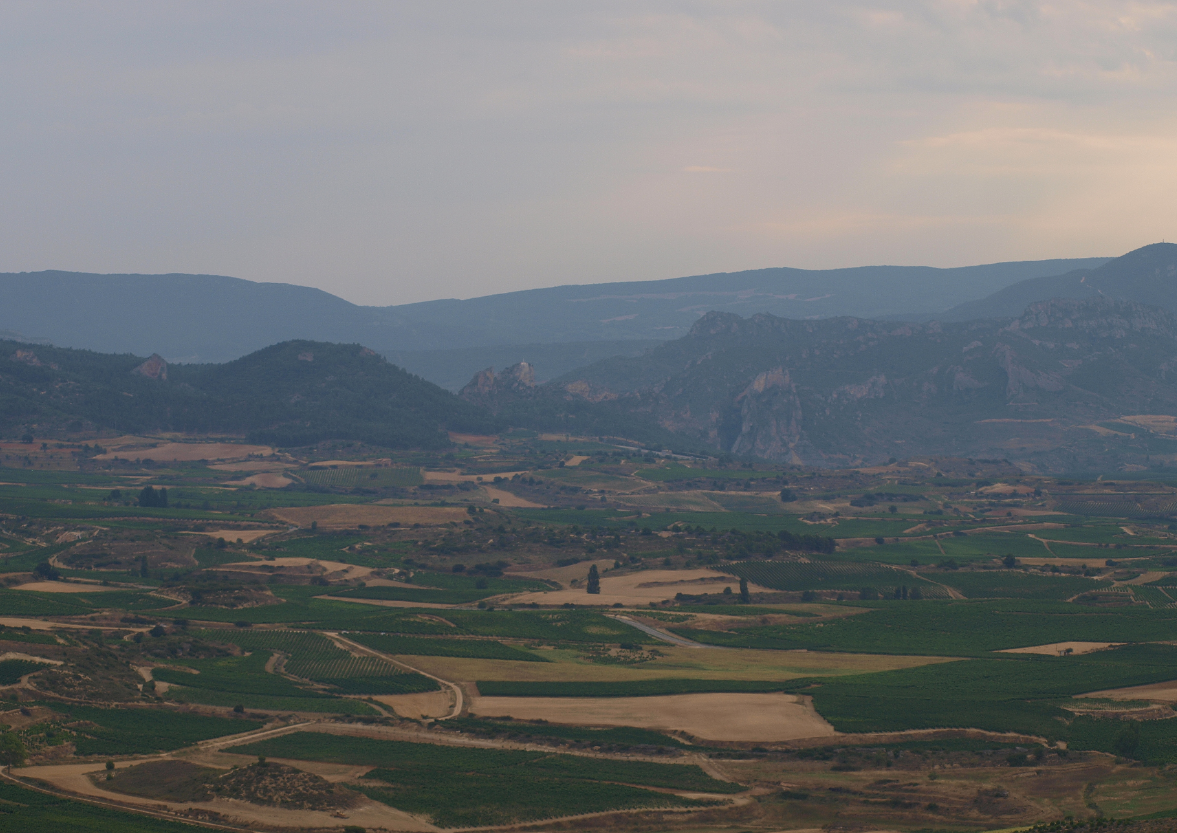
Panoramic view of Rioja landscape
                          
Rioja is a region full of plans and tours to do, so you can not miss this opportunity to know our place. Of course, you can discover our gastronomy, amazing food and dishes which you could pair with wonderfull wines from the DOCa. Rioja.


Also, you can visit wineries and learn something else about our traditions and roots and our know how to elaborate Rioja wine. Bodegas Santalba will be open for wine tours in the following dates and hours:

17th Thursday: Visit winery and vineyards 10:30 & 12:30
18th FridayVisit winery and vineyards 11:30
19th SaturdayVisit winery and vineyards 11:30
20th SundayVisit winery and vineyards 12:00
21st MondayVisit winery and vineyards 12:00


* Also, if you book it, taste of wines is available.

The rest of the days, the winery will be open during the day from 10:00 to 18:00. If you want to visit us, please, confirm your tour before you come sending an email to santalba@santalba.com or booking your visit on +34 941 304 231.

Friday, December 13, 2013

Peñin Guide points to Bodegas Santalba Rioja Wines

Year by year, after a huge effort it is fantastic to have a good feedback and get these fantastic points from Peñin Guide whom always gives to our wines wonderful positions in its classification:
Nabot Single Vineyard 2005

ERMITA DE SAN FELICES RESERVA 2008 - 88 POINTS

Click here for tasting notes

NABOT SINGLE VINEYARD 2005 - 89  POINTS

Click here for tasting notes

OGGA RESERVA 2008 - 90 POINTS

Click here for tasting notes

Santalba Limited Edition 2008
SANTALBA ECOLÓGICO RESVERATROL 2011 - 90 POINTS

Click here for tasting notes

SANTALBA LIMITED EDITION 2008 - 89 POINTS

Click here for tasting notes

VIÑA HERMOSA RESERVA 2008 - 88 POINTS

Click here for tasting notes


Thanks everybody to make this posible and please continue following our day by day!

Wednesday, November 6, 2013

Climate change in Rioja wines, fact or fiction?

Long time ago we wanted to try (or to check), if climate change is a reality in Rioja wines. Last year we were selecting some plots to develop a very interesting test. We wanted to compare the wine made from higher vineyards (always above 750 meters high), with the lower conventional wine (between 350 and 500 meters). To give even more character to this particular wine, we just went ahead only with which the ones that were facing north. We were trying to give to the wine cooler temperatures, less hours of sunshine annually and important thermal gradient between night and day. With these conditions, the plots really were micro -plots, fairly old and with very low production of grapes. So, we created the SANTALBA COTAS ALTAS (or in english, SANTALBA HIGH TOPS).


Wine made from grapes from Tempranillo (60%) and Grenache (40 %), from micro-plots situated on slopes at high altitude and north facing. The slow ripening of the grapes gives this wine fresh and fruity aromas, light body and low alcohol content (more information here) .


Tuesday, April 9, 2013

Wine process - Part III


After this alcoholic fermentation and as we have been talking about, wine should have another fermentation called Malolactic fermentation. This point of fermentations is really important and a decisive aspect for the final result.

This process is done when the malic acid turn into lactic acid because of the lactic bacteria. During the process there is a very important emission of carbonic gas, and that is why the winery and the elaboration area has a very modern and sophisticated alarm system to detect the carbonic level and, just in case, get it out from the winery.

This fermentation is also called Secundary fermentation.

Temperature control panel
The malolactic fermentation effects are the depletion of the total acidity because part of it turned it into carbonic gas. This gas is lost and detached during the process.

The acid malic fermentation is caused because of the development of the lactic bacteria located in the ripe grape skin.

In Bodegas Santalba, fermentations are controlled and supervised by a very modern and innovative temperature control system where a panel tell us how is working each tank and if necessary send cold or hot in each moment.

When this stage is concluded we have different options to continue the wine process until the wine will be in our cups... keep and eye and we will continue soon

Wednesday, January 30, 2013

Wine process - Part I

After to show this grafic on our Social Networks, some friends have been asking about it and that is why we want to explain you our "know how" of Rioja Wine Process. We hope you will enjoy it and please, if you have any question, ask us
Proceso de elaboración Bodegas Santalba
As you know, all the process starts in the vineyards, after the hard work done during the year around the 10th of October, the HARVEST starts in Bodegas Santalba. Depends on the year, the climate for example will be an important factor to get different quality. The Consejo Regulador from D.O.Ca. Rioja will calificate the harvest after some tests and facts as Excellent, Very Good, Good, Satisfactory and Average.

All the grapes are not from the same vine and vineyard, so they will have different features. For example, if they come from very old vineyards, like the grapes we use for our Santalba Single Vineyard (http://www.santalba.com/vinos/?acc=vinos&fam=8&idv=17&idc=8 ) they will have "special" characteristis to survive a long ageing process into the barrels and bottles. That is why not every year we have these special wines. 


Proceso tradicional del pisado de la uva In the picture above the text, you can see the grape process falling down into the machine,  where the grapes will be separated the fruit from the "green" part by the destemmer. The green part will be rejected and the grape, quite broken goes to the tanks where the grape juice in touch with the grapes will do the maceration.
After this, we send the grapes to the press. This process now is done by very modern machines but the traditional way to press the grapes were like the picture, done by people in half barrels, just walking above them. 
Now starts a very important moment in the wine process the FERMENTATION. We have two different the ALCHOLIC and the MALOLACTIC and we will explain the differences between them soon.

Wednesday, January 16, 2013

The prune - Working hard at the vineyards

In Bodegas Santalba the pruning and the pre-pruning are done to increase the quality of the grapes and also to make longer the vines life. .It will reduce the veg part of the plant so the growth and yields will be limited to get better results and  improve the wine quality.
 
Pruning at the vineyard

This is a very important point to obtain quality wines, because we can not forget that all the wine process start at the vineyards, so the hard work and care that we have now with the vines will be tralate into wine quality and atributes.


The grape quantity is not related with the green part or vegetable growth of the vines. If the vines have lots of fruits they will have a small size and will be really diffcult their maturation, so again, the quality will be affected.

The prune - In the traditional way with a modern scissor
 

In general, the vines can grow more than 30 meter high so from the prune we get the "sarmientos" and we will use them for BBQ as wood, they are great to cook Lamb chops (very tipycal from Rioja). Only the buds located at the end of the branches where the sap is, will be the ones that will improve, the others near the trunk will not sprout.


The prune objetive is to reduce the number of branches and the length to make the vine stronger, with a longer life and improving the quality of the fruits.


Wednesday, November 21, 2012

TASTING COURSE VI - BODEGAS SANTALBA

SENSE OF TOUCH

With the wine into the mouth you can have two different sensations:


Active, which is located in the tongue and pasive, located in the lips and cheeks.

The astringency (dry and rough sensation), the temperature that the alcohol couse into de mouth ot the spicy flavour are touch reactions when we are tasting wine.
The most important is the astringency because it cause a worse result tasting the wines.

SENSE OF EAR

This one is the less important but it can give us lot of information during the tasting, for example the sound when the wine goes into the glass confirm us some other sensations from other senses like the density.


After this, as we explain at the beginning of the course, the most important is to practice and train the senses with easy examples and start getting knoledges, you will see with time your progress.

Thursday, October 4, 2012

TASTING COURSE V - BODEGAS SANTALBA

Hi Friends! After some time without posts now we restart full of energy with our tasting course. We are going to explain you two senses today: smell & taste. Both are extremely important in the tasting process and give us information to say i like or i do not like this wine so... LET'S GO :)

SENSE OF SMELL

This sense give us information about the grape variety, winemaking process and ageing, barrels (oak) and evolution. As you know in the smell sense we have two kinds of information gived by the nose and the retronasal the part between the mouth and the nose


We will need two different words aroma if we speak about positive sensations smell for the negative ones.
 
First, through the nose we have the primary aromas and the inhalation is with the still wine or after shake it turning it slightly.

On a second step, we have to shake it more and we will have more aromas, the secundary aromas, from the fermentation.


Primary aromas from the grape and could be:

  FRUTY:
White wine:: Orange, lemon, moscato
Red wine: Blackberry, cherry, raspery, ...

  FLORAL:
Violet, rose, pine...
  VEGETABLES: 
Rosemary, pine, green pepper...

Secundary aromas, will be produced in the fermentation process and they are inhalated when we shake strong the wine and through the retronasal. Some of them are saffron, pineapple, pear, apple, peach, strawberry, honey, ...


The terciary aromas, are produced during the ageing time knowed as BOUQUET and we have :
From Oxidation because of the contact between oak during its time into the barrel and the ageing into the bottle because of the NO oxigen in this period. Some of them are vanila, mushroom, toasted bread, nuts, cacao, coffe, caramel...


Thursday, August 23, 2012

DO YOU KNOW THE MEANING OF "ENVERO"??


In our vineyards in La Rioja-Spain, some time ago we could watch the "envero". It is a term used in viticulture referred to one of the most important stages in the grapes ripening. Basically it´s a change in the color; the red varieties change into a bluish color, and white ones turn yellow.


This change represents a transition to the end of the ripening, it takes place in the summer and can be considered the beginning of a countdown when we can start thinking about the harvest. That countdown  depends on grape varieties, climates and weather conditions. Grapes, as they grow on the vine, are undergoing morphological and physiological changes that allow them to accumulate substances such as sugars and acids, primary aromas and some phenolic compounds that are the responsible of the color, taste and structure of wines.

Not much time ago, winegrowers tasted grapes from the vines after "envero". Valuing the sweetness and the  acidity decreasing in grapes, they decided the best moment for harvest. Today, even without despising this technique, we can check acidity and sugar content in grape and we are able to decide more accurately, parcel by parcel, the begining for the harvest every year.

Monday, July 23, 2012

TASTING COURSE IV - BODEGAS SANTALBA

 
We continue with our tasting course and we will try to be a professional sommelier.

In this point we will go step by step, sense by sense analyzing the wine

Depends on the experience each one can choose the best order and follow its own routines:

Sight eye, Smell, Taste, Touch and Hearing Senses


Sight eye
It is the first sense, and we look 3 important characteristics: Colour, Intensity and cleanliness.

The wine should be looked in the glass, first settle and through the light trying to appreciate the cleanliness, colour and brightness…

Later round the glass and look the wine, a fluid wine is like water and a dense one like syrup.

After shake it, we will see “tears” on the glass’s wall and this will be more or less alcoholic % and glycerine content, very relevant in this part of the tasting.

The Colour should be analyzed tilting the glass 45º and above a white background to see better the colours. The colour is very close to the age of the wine. If lighter and brown it is older than blues and violet.

Have a look to the different colours depends on the age:

The cleanliness depends on the transparency of a wine and the decants, clarified and filtered.

We will continue soon with another sense and different points to be a professional sommelier and to do a taste with friends!

Cheers!

Monday, July 9, 2012

TASTING COURSE III - BODEGAS SANTALBA

Hello friends, then, we continue with the tasting process and the technique to be a professional somelier /taster.

1. First we open the bottle and fill the glass about 1/3.


2. We look at the wine and use the light or a white background to check the aspect , smell, lightness, …etc.


3. We should shake the glass very slowly and hold the glass by the bottom.
Smell the wine to get the volatile smells.
After that you should shake strong to get the heaviest. You should repeat this a few times to see as much as possible


4. Now you have to introduce a small sip and keep it in your mouth for a few seconds (5-6) to warm the wine and give it a temperature around 35ºC.
Alter this, you have to move the wine around all your mouth to impregnate the taste buds.

5. With the wine in your mouth you have to suck up some air and pass it through it. The air will be expel it through the nose.

This process is called retro-nasal and the wine smell it is similar to the smell that you get in the glass but usually you get some news because of the warming in mouth.

6.After you should drink or expel the wine. The aromatic and mouth sensations do not disappear after it. Some of them keep in because of the persistence. As much time as it keep it, the qualities of the wine be better. In some wines of high quality this is around 10 seconds.

This is also linked with a well-balance wine, when you have a long persistence and this is group and balanced is used by the professional sommeliers and tasters this expression.

During the tasting process we use the 5 senses and each one have to use them as better as possible but my advine is to shake very fase and smell it quickly to get all the aromas and do not lose but we will continue in our next post.


Keep an eye and we will inform you soon about the next step in the wine tasting. We are close to be a professional.

Cheers!

Tuesday, June 12, 2012

TASTING COURSE II - BODEGAS SANTALBA

We continue with our tasting course

Then, when we are ready, we will start with the tasting:

  • From the lightest to the hardest
  • From the weakest to the most alcoholic
  • From the driest to the sweetest


VIÑA HERMOSA - BODEGAS SANTALBA


Firstly we should start the tasting with whites, continue with the roses and finísh with reds, starting with the younghest and continue with the aged ones. If there is any sweet, we will leave it for the end. 

The glass do not have to be filled more than the 1/3, reasons:

Example about the quantity

  • To shake it without problems
  • To smell properly the aromas that the wine dislodge
  • To see the colour because if we have too much wine, we can not see the colour clearly reflected in the other side of the glass, table, hand... 


We wish you are taking notes about these advices and you will use them in future tastings… Soon, we will post new secrets about tasting…


Cheers!


Thursday, June 7, 2012

TASTING COURSE - BODEGAS SANTALBA

The more representative picture about our winery is The Taster so we will post a guide about the Wine Tasting Process and we will try to teach how to do a professional tasting with family, friends …


First, we must learn to perceive the difference between taste or drink..

Everybody has ability to taste, however, nobody is born knowing and it is an activity that will be improved when you train, keep the senses and learn the techniques.

The
taster has to be relaxed, calm and focused. The best time to taste is in the morning, one or two hours before lunch. It is better to taste a little hungry and alone, and try to eat  neutral food like bread, crackers, breadsticks etc., Some people with a little bit of water may be enough.

Depends on the knowledge of the taster, tasting should not be in longer than an hour and to taste no more that 6 or 8 wine samples.


The tasting room should be a quiet place with a temperature of 20 ° and a relative humidity between 60 and 70% where the taster can be concentrated without noise if possible. Lighting should be ok too (halogen lamps or candles). It should not be used fluorescent lamps. It should have a white background where you can see different wine shades and brightness.In the beginning, we have to take all the material that we will need, wines, drinks, glasses…
The temperature of the wine must have her around:
White and Rose: 8/10 degrees
White and rose with aging: 10/12 degrees
Young red wines: 14/16 degrees
Aged wines, 16/18 degrees.


The glass is the most important instrument for the taster. Glass should be fine, colorless, transparent and smooth. The glass must be caught by the bottom to avoid getting fingerprints on the glass clouding vision and to warm the wine.

To start is enough, we will teach you more about the taste and the process that you should follow to taste as a professional.

Cheers!!